
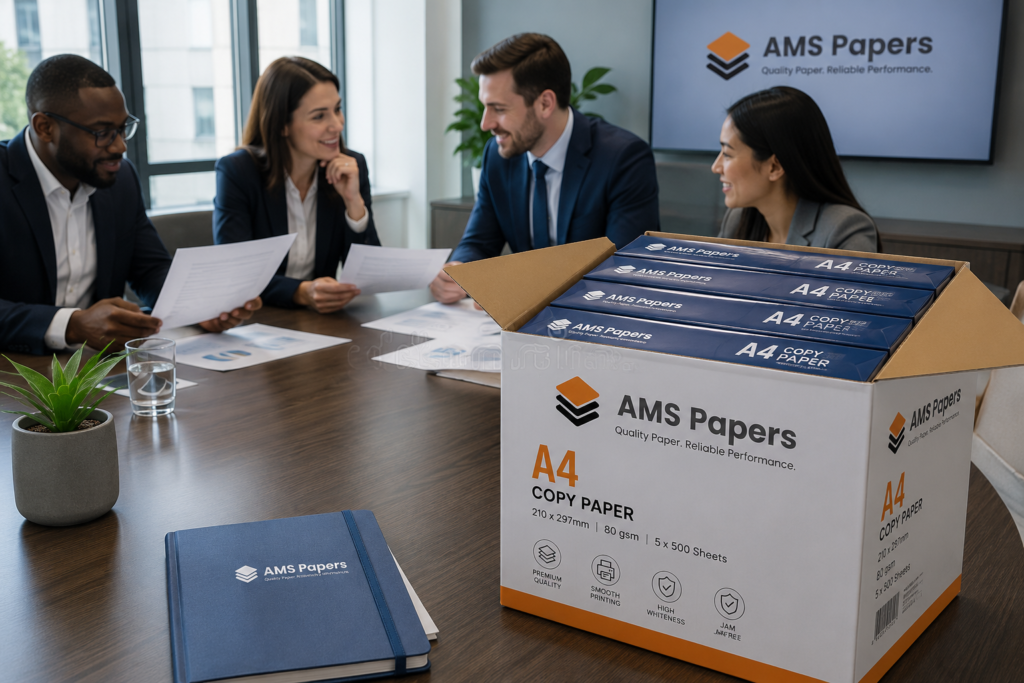
When businesses order A4 paper, the first question is almost always the same: how many sheets are actually in a box of A4 paper?
The short answer is straightforward but understanding paper quantities means knowing the difference between sheets, reams, cartons, and pallets. Getting this wrong can mean under-ordering, overpaying, or running out of stock at the worst possible moment.
Quick answer: A standard box (carton) of A4 copy paper contains 2,500 sheets that’s 5 reams, with 500 sheets per ream. Packaging can vary slightly by manufacturer and paper grade, so it’s always worth confirming with your supplier.
This guide breaks down exactly how A4 paper is measured and packaged, what to look for before buying in bulk, and how to choose a paper supplier that supports your business long-term.
How many sheets in a box of A4 paper. Sheets, Reams, and Boxes: Understanding A4 Paper Quantities
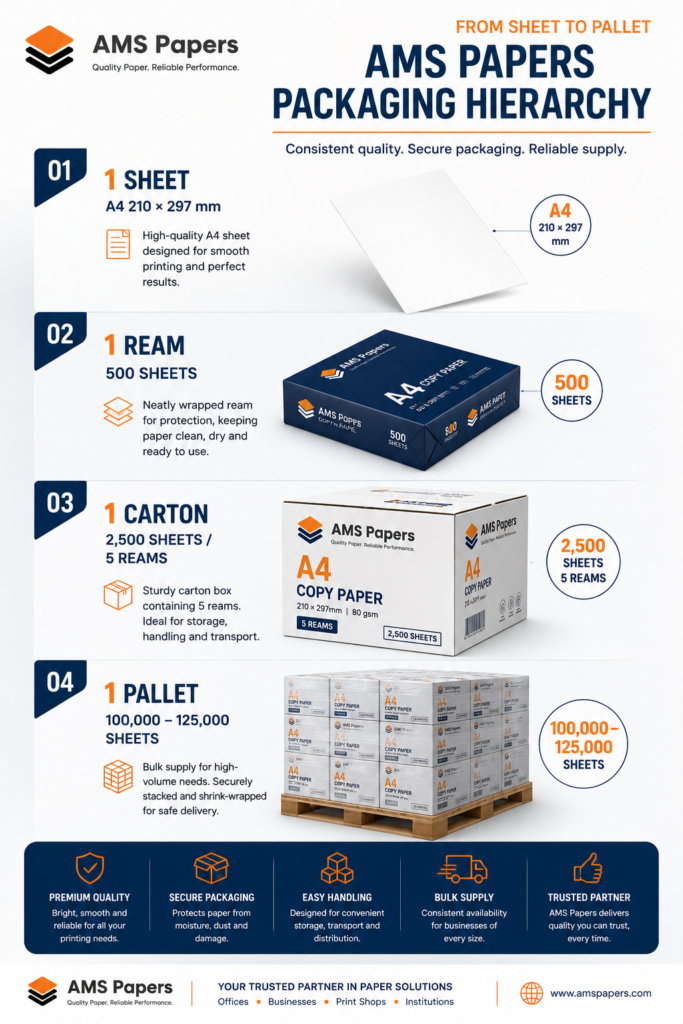
Before comparing prices or suppliers, it helps to understand the standard units paper is sold in.
| Unit | Quantity |
|---|---|
| 1 Sheet | 1 piece of paper |
| 1 Ream | 500 sheets |
| 1 Box / Carton | 5 reams (2,500 sheets) |
| 1 Pallet | Multiple cartons |
- Sheet — a single piece of paper.
- Ream — the standard package of 500 sheets.
- Carton/Box — usually 5 reams, or 2,500 sheets, of A4 paper.
- Pallet — several cartons stacked together for large commercial orders.
Knowing these terms prevents ordering mistakes and makes it much easier to compare quotes between suppliers.
How Many Sheets Are in a Ream of A4 Paper?
A standard ream of A4 paper contains 500 sheets. It’s the most common unit for everyday office printing because it’s easy to handle, store, and budget for.
How Many Reams Are in a Box of A4 Paper?
Most standard A4 copy paper cartons contain 5 reams:
5 reams × 500 sheets = 2,500 sheets per carton
Some specialty or premium papers may be packaged differently, so it’s worth checking the product specification sheet before placing a large order.
Why Choosing the Right A4 Paper Supplier Matters
Many businesses treat copy paper as a simple commodity: a box arrives, employees use it, and another order goes out. But paper quality and supplier reliability directly affect daily operations.
A cheap order that arrives late, is inconsistent in quality, or performs poorly in printers creates hidden costs paper jams, damaged equipment, wasted sheets, and interrupted workflows can easily outweigh the money saved on a lower price.
A reliable supplier should help you understand:
- Which paper weight suits your printers
- How much inventory you actually need
- Which brands offer the best value
- How bulk purchasing can lower your cost per sheet
- How to avoid shortages during busy periods
For companies buying hundreds or thousands of sheets a month, choosing a supplier is a strategic decision, not just a transaction. AMS Papers focuses on helping customers source dependable office paper products, with clear specifications and professional supply support.
12 Factors to Consider Before Buying A4 Paper in Bulk
1. Calculate Your Actual Paper Consumption
Instead of buying based on price alone, work out:
- Number of employees
- Average monthly printing volume
- Type of documents printed
- Seasonal changes in demand
For example, a small office printing 5,000 pages a month may need just two cartons, while a large organization printing invoices and reports daily may need pallet-level orders. The goal isn’t buying more it’s buying the right amount at the right time.
2. Compare Paper Quality, Not Just Quantity
Two boxes with the same sheet count can perform very differently. Key quality factors:
- GSM (grams per square meter): common options are 70, 75, and 80 GSM. 80 GSM is widely used for professional office printing because it balances durability, print quality, and cost.
- Brightness: higher brightness improves contrast and document appearance.
- Smoothness: a better surface reduces printer friction and jams.
The cheapest paper isn’t always the lowest-cost option once you factor in waste and printer downtime.
3. Check Brand Reputation and Consistency
Reliable brands invest in manufacturing standards, quality control, packaging protection, and printer compatibility testing. Consistency matters because employees shouldn’t notice a difference every time a new shipment arrives.
4. Buying Per Box vs. Buying by the Pallet
Cartons tend to suit:
- Small offices
- Businesses with limited storage
- Occasional printing needs
Pallets tend to suit:
- Large companies and schools
- Government organizations
- Printing-heavy businesses
- Resellers and distributors
Buying larger quantities can lower the cost per sheet — but only when demand is predictable and storage is adequate. A pallet that sits in poor conditions or gets bought too far ahead of need can erase those savings quickly.
5. Evaluate Packaging Quality and Protection
Paper is sensitive to moisture, dust, and rough handling. A good carton protects sheets from humidity, physical damage, folding, and contamination in transit this matters even more in regions with high humidity or long shipping distances. According to the EPA’s guidance on paper and office products, proper handling and storage also help reduce material waste. A damaged carton might look minor, but moisture exposure can affect print quality and paper feeding.
6. Consider Printer Compatibility
Different machines laser printers, inkjet printers, photocopiers, and multifunction devices respond differently to paper. The wrong choice can cause jams, poor image quality, ink absorption issues, and more maintenance. For everyday reports, invoices, and contracts, a quality 75 or 80 GSM copy paper is usually the practical choice. Checking your printer manufacturer’s paper recommendations (for example, HP’s printing supplies guidance) can help avoid compatibility issues.
7. Compare Total Cost, Not Just Purchase Price
The real cost of paper includes more than the sticker price:
- Paper price and delivery fees
- Waste caused by poor quality
- Printer issues and maintenance
- Employee time lost to paper jams
- Emergency replacement orders
Instead of comparing cost per box, calculate cost per usable printed page a slightly pricier paper can end up cheaper overall.
8. Check Supplier Availability and Delivery Reliability
Running out of paper can interrupt daily operations. A good supplier offers reliable stock, predictable delivery times, and clear communication. A lower price isn’t worth much if the supplier frequently runs out of stock.
9. Look for Clear Product Information
You should be able to easily find paper size, GSM weight, sheet count, brand, packaging details, and recommended use. A lack of clear product details often signals a less reliable supplier.
10. Consider Sustainability and Environmental Standards
More organizations now factor environmental responsibility into procurement, including responsible sourcing, recycling options, and reduced waste. Look for suppliers who can speak to their FSC certification standards or similar sourcing credentials.
11. Understand Storage Requirements
Paper should be stored in a clean, dry environment, ideally in original packaging, away from direct sunlight and humidity. Poor storage is one of the most common reasons bulk purchases end up wasted.
12. Build a Long-Term Supplier Relationship
The best supplier isn’t always the one with the lowest price today. Long-term value comes from consistent quality, reliable availability, and a supplier who understands your business’s actual needs helping you plan purchases, avoid shortages, and improve purchasing efficiency over time.
Quick Reference: How many sheets in a box of A4 paper?
| Unit | Quantity |
|---|---|
| 1 Sheet | 1 piece of paper |
| 1 Ream | 500 sheets |
| 1 Box/Carton | 5 reams |
| 1 Box/Carton | 2,500 sheets |
| 1 Pallet | Multiple cartons |
Sheet count is only part of the picture — supplier quality, packaging, and delivery reliability all determine the real value of a paper purchase.
Common Mistakes Businesses Make When Buying A4 Paper
- Choosing only based on the lowest price — cheap paper often means more jams, waste, and maintenance.
- Confusing reams, boxes, and pallets — always confirm exact sheet counts before ordering.
- Buying too much without proper storage — bulk savings disappear if stock is damaged.
- Ignoring paper specifications — GSM, brightness, and smoothness matter as much as size.
- Not planning for future demand — track usage and set a predictable reorder schedule instead of ordering only in emergencies.
Questions to Ask Before Placing an A4 Paper Order
- How many sheets are included in each box? Confirm sheets per ream, reams per carton, and cartons per bulk order.
- What GSM paper is recommended for my needs? 70, 75, or 80 GSM will suit different print jobs.
- Is the paper suitable for my printers? Confirm compatibility with laser, inkjet, copier, or multifunction devices.
- What brands and specifications are available? Ask for manufacturer, quality, and packaging details.
- What are the delivery options and timelines? Understand availability, lead times, and bulk order procedures.
- Is there support for repeat orders? A good supplier should recognize your regular quantities and preferences.
Why AMS Papers?
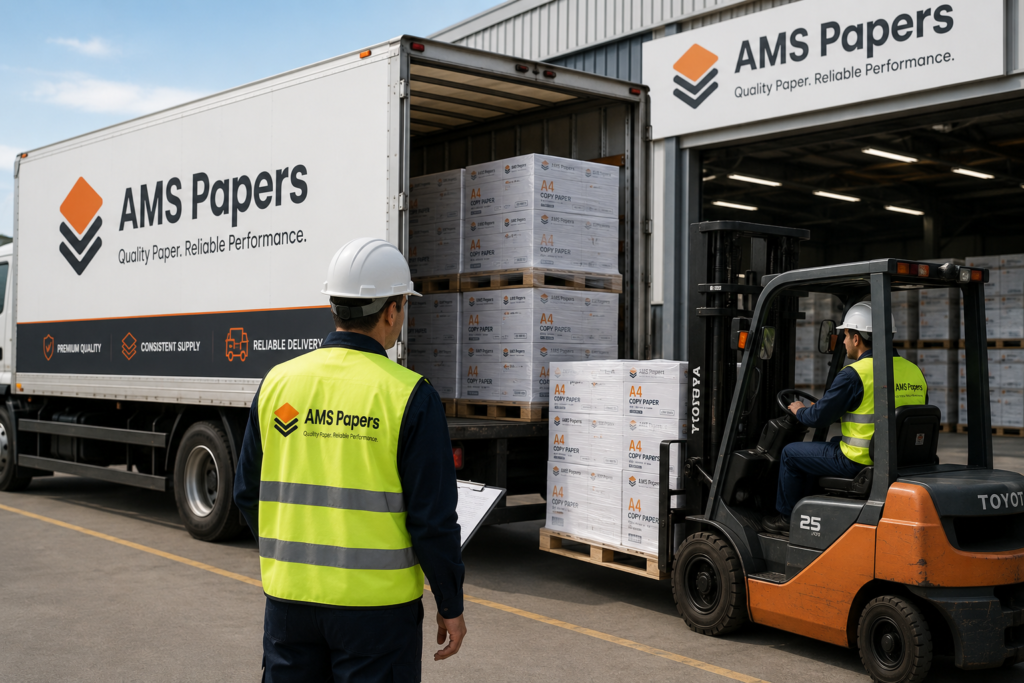
Choosing the right paper supplier is about more than finding boxes of paper it’s about quality, consistency, and long-term supply reliability. AMS Papers helps businesses simplify office paper sourcing with clear product information and dependable supply solutions for a range of professional needs.
From understanding A4 paper specifications to choosing the right order quantity, AMS Papers focuses on helping customers make informed purchasing decisions whether that’s a few cartons or a full pallet order.
Conclusion
Understanding how many sheets are in a box of A4 paper is the first step toward smarter purchasing. A standard carton contains 2,500 sheets (5 reams of 500 sheets), but businesses should look beyond sheet count when choosing a paper supply paper quality, printer compatibility, storage conditions, and supplier reliability all matter just as much.
For organizations that order office paper regularly, partnering with a dependable supplier reduces unnecessary costs, prevents supply interruptions, and keeps printing performance consistent. Whether you’re ordering a few cartons or planning a larger bulk purchase, the goal stays the same: the right quality, the right quantity, and the right supplier for your business.
Frequently Asked Questions
How many sheets are in a standard box of A4 paper? A standard box or carton of A4 copy paper usually contains 2,500 sheets, packaged as 5 reams of 500 sheets each. Packaging can vary by manufacturer, so confirm the exact count before ordering.
How many sheets are in one ream of A4 paper? A standard ream of A4 paper contains 500 sheets, making it the most common unit for everyday office printing.
How many reams are in a box of A4 paper? Most standard cartons contain 5 reams (5 × 500 = 2,500 sheets). Specialty papers may be packaged differently.
How many sheets are in a pallet of A4 paper? This depends on the supplier and pallet configuration, since a pallet holds multiple cartons of roughly 2,500 sheets each. Always confirm cartons per pallet and total sheet count with your supplier.
Is buying A4 paper in bulk cheaper? Bulk buying can lower the cost per sheet, especially with predictable printing needs, but only if you have proper storage, steady cash flow, and a reliable supplier — otherwise the savings can be lost to waste or damage.
What is the difference between 70 GSM, 75 GSM, and 80 GSM paper? GSM measures paper weight in grams per square meter. 70 GSM is lightweight and cost-effective for high-volume printing; 75 GSM balances affordability and quality; 80 GSM is a popular professional standard offering better thickness and print performance.
How should businesses store A4 paper? Store paper in a clean, dry environment away from moisture and direct sunlight, ideally in its original packaging until use, to protect print quality and prevent jams.
What should businesses consider when choosing a paper supplier? Look at product quality, brand availability, delivery reliability, pricing transparency, customer support, and the supplier’s ability to handle repeat orders consistently.