
Waste Paper Recycling
Most businesses treat waste paper the same way they treat used coffee filters something to throw away and forget about. A bin fills up, a cleaning crew empties it, and nobody looks at it again. That habit isn’t wrong, exactly. It’s just expensive in a way that rarely shows up on anyone’s radar.
Waste paper isn’t garbage. It’s a commodity with a market, a grading system, and a price that moves with global demand for recovered fiber. Businesses generating a meaningful volume of paper waste print shops, distribution centers, offices with high print volume, schools, anywhere paper moves through in bulk are sitting on a resource they’re currently paying to dispose of instead of getting paid to recover. This piece walks through why that gap exists, what the waste paper market actually looks like from the inside, and what it takes to turn a disposal cost into a modest but real revenue stream.
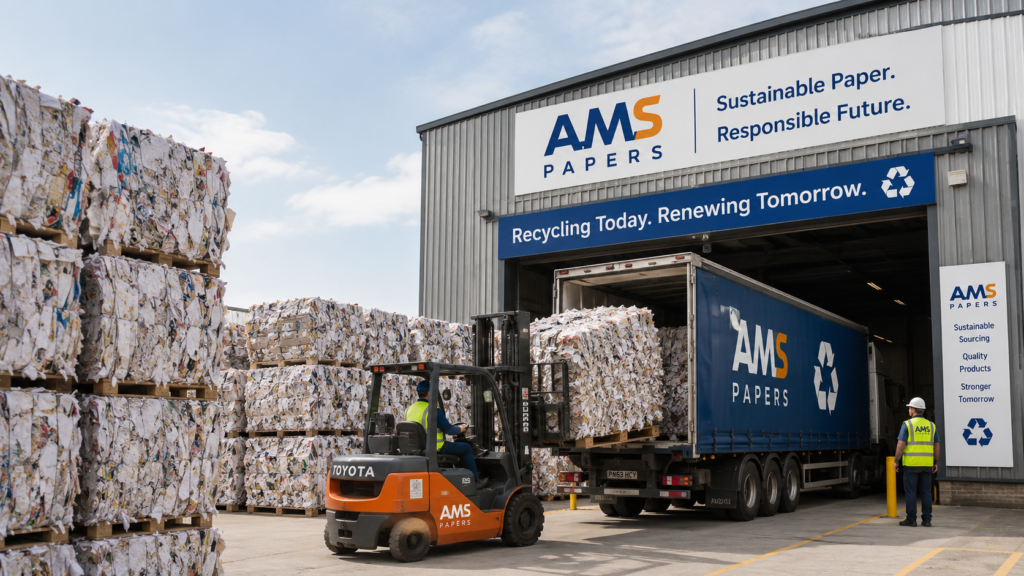
Why Waste Paper Gets Treated as Trash Instead of Inventory
Part of the reason is scale. A single office generating a few bags of shredded paper a week isn’t going to interest a paper broker, and most businesses correctly assume it’s not worth the effort. But plenty of businesses generate far more than a few bags and never revisit that assumption once their operation grows.
Part of it is also unfamiliarity. Office managers and facilities teams know how to negotiate a janitorial contract or a waste hauling agreement. Almost none of them have ever spoken to a paper broker or a recycling processor, because it’s simply not part of the vocabulary most procurement and operations teams grew up with. The market exists, but it’s adjacent to industries most office-based businesses never interact with directly recycling, waste management, and industrial commodities.
And part of it is inertia. Waste hauling contracts bundle everything together: general trash, cardboard, paper, all picked up on the same schedule by the same vendor, often without itemizing what’s actually inside each bin. Once that arrangement is in place, nobody goes back and asks whether the paper specifically could be handled differently and more profitably. The U.S. Environmental Protection Agency (EPA) paper recycling guidance publishes general background on how paper recycling and waste diversion fit into broader waste management practices, worth a look for businesses building a case internally for why this deserves attention.
Understanding Paper Grades: What OCC, SOP, and Mixed Paper Actually Mean
If you want to sell waste paper rather than pay to have it hauled away, you need to speak the market’s language. The recovered paper industry sorts material into standardized grades, and the grade determines both who will buy it and what it’s worth. The three you’re most likely to deal with as a general business are OCC, SOP, and mixed paper.
OCC (Old Corrugated Containers)
This is cardboard shipping boxes, packaging material, anything made from corrugated fiberboard. OCC is generally the most consistently valuable of the common grades, because corrugated fiber is long and strong, which makes it useful for manufacturing new packaging. Any business that receives regular shipments retail, distribution, manufacturing accumulates OCC whether they think about it or not.
SOP (Sorted Office Paper)
This grade covers the paper most office environments actually generate: copy paper, letterhead, printed documents, non-glossy white and colored paper. SOP is valuable because it’s relatively clean, consistent fiber that paper mills can process into new office paper or tissue products without extensive de-inking or contaminant removal. This is the grade most relevant to a typical office generating standard printing and copying waste.
Mixed Paper
This is the catch-all category for everything that doesn’t fit neatly into a cleaner grade magazines, mixed printed materials, envelopes with plastic windows, paper with heavier ink coverage or coatings. Mixed paper is generally worth less than OCC or SOP, sometimes considerably less, because it requires more processing to separate out contaminants before a mill can use it.
[Image: occ-sop-mixed-paper-grades.jpg — alt: “OCC SOP and mixed paper grade comparison for recycling”]
The grading standards themselves including detailed specifications for what qualifies as each grade are maintained by industry bodies such as the Institute of Scrap Recycling Industries (ISRI)], which publishes the reference specifications processors and brokers use across the recovered paper trade.
Why the Grade You Sort Into Matters More Than the Volume You Generate
Here’s something a lot of businesses miss: a smaller volume of well-sorted SOP is often worth more, per ton, than a larger volume of contaminated mixed paper. Sorting quality is not a minor detail it’s the single biggest lever most businesses have over what their waste paper is actually worth.
How Waste Paper Is Valued and Why the Price Moves Around
Recovered paper is a genuine commodity, traded and priced the way scrap metal or agricultural products are. That means the price a broker or processor will pay for your material isn’t fixed it moves with global demand for recovered fiber (see our Recycled Paper Solutions Category for how this connects to recycled content in the paper you might also be purchasing), mill capacity, export markets, and general economic conditions. Commodity price reporting services Fastmarkets RISI is a commonly referenced source in this industry) track these movements the way other markets track oil or steel.
Practically, this means two things worth internalizing before you get excited about a recycling revenue stream:
- The number you’re quoted today won’t be the number in six months. Waste paper markets can move meaningfully within a single year, sometimes within a single quarter. Build your expectations around a program that’s worth doing regardless of where the price sits, not one that only makes sense at a peak.
- Grade and contamination affect price more than most people expect. A load of SOP with visible contamination food waste, plastic, non-paper materials can be downgraded or rejected outright, turning a potential revenue stream back into a disposal cost overnight.
If you’re serious about this, the right first move isn’t to build elaborate infrastructure. It’s to call two or three local paper brokers or recycling processors and ask what they’re currently paying for the grades you’d realistically generate, and what volume and quality threshold makes it worth their time to pick up. That single conversation will tell you more than any general guide can, because pricing and logistics are genuinely local.
Setting Up a Basic Waste Paper Collection and Sorting Process
You don’t need an industrial operation to participate in this market plenty of mid-sized businesses run a simple, low-cost version that still captures meaningful value. The structure generally comes down to three decisions.
1. Decide What You’re Actually Sorting For
Most offices should start with a simple two-stream approach: clean office paper see our A4 Copy Paper Guide for the standard specifications behind this material) destined for SOP, separated from everything else. Trying to sort into five or six grades from day one usually collapses under its own complexity a simpler system that people actually follow beats a sophisticated one that gets ignored within a month.
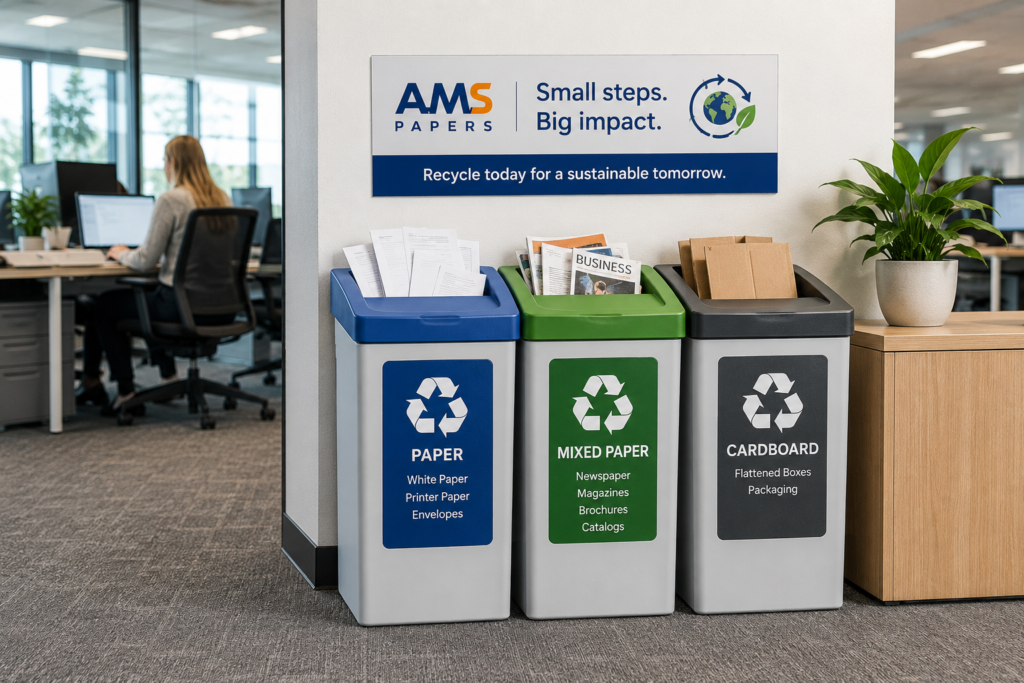
2. Solve for Contamination at the Source
Contamination is the single biggest threat to resale value, and it’s almost always a behavioral problem, not an equipment problem. Coffee cups, food wrappers, and general trash ending up in the paper bin because it’s the closest bin to a desk will quietly degrade an entire load. Clear signage, well-placed bins, and — frankly — making the paper bin slightly less convenient for general trash than the actual trash can, does more for your resale value than any sorting technology.
3. Match Your Equipment to Your Actual Volume
- Low volume: Standard bins and bags, collected and delivered manually or picked up by a local processor on a recurring schedule.
- Medium volume: A dedicated collection area with clearly marked containers, potentially with a compactor if space and volume justify it.
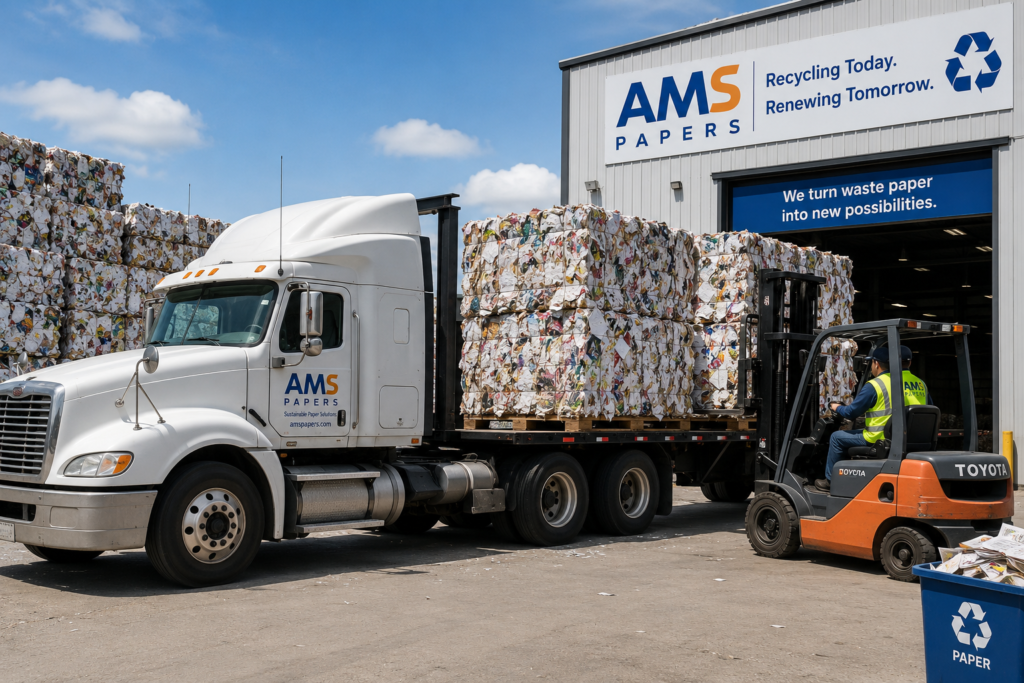
- Higher volume: A baler becomes worth considering once you’re generating enough material that loose, uncompacted paper becomes a logistics problem for pickup. Balers compress paper into dense bales, which most processors prefer and sometimes pay a premium for, since baled material is easier and cheaper for them to transport and store.
Balers represent a real capital cost, and the payback period depends entirely on your volume and local pricing — this is exactly the kind of decision worth running past a local processor before committing, rather than assuming the investment pays for itself.
What Actually Affects Resale Value
A few factors matter more than most businesses expect when it comes to what your waste paper is actually worth:
- Consistency of grade. A load that’s reliably one grade, batch after batch, is worth more to a processor than an inconsistent mix, because it’s predictable for them to process and resell.
- Contamination level. Covered above, but worth repeating this is the factor most within your control and the one most likely to quietly erode value if ignored.
- Moisture. Wet or damp paper is heavier (which sounds good if you’re paid by weight) but is generally downgraded or rejected, since moisture damages fiber quality and can promote mold in storage.
- Bale density (if baling). Denser, well-formed bales are easier to handle and ship, and processors sometimes price accordingly.
- Volume and pickup logistics. A processor’s willingness to pay a premium or even to bother picking up at all often depends on whether your volume justifies a dedicated stop on their route.
When It Makes Sense to Formalize a Waste Paper Program
Not every business should build a dedicated waste paper revenue program, and it’s worth being honest about that rather than pretending every office should run one. A few signals suggest it’s genuinely worth pursuing:
- You’re generating enough volume that a broker or processor will actually schedule a recurring pickup, rather than treating you as an occasional, low-priority stop.
- You have (or can create) a reasonably clean, dry, and consistent stream of a valuable grade like OCC or SOP, rather than a heavily mixed and contaminated waste stream.
- Your current waste hauling contract doesn’t already itemize or credit you for recyclable material — meaning there’s an actual gap to close, not something already partially captured. (If your business also sources paper at volume, it’s worth reviewing this alongside your Wholesale Paper Supply Category ordering pattern, since both affect your overall paper cost picture.)
- You have somewhere to stage material between pickups without it becoming a fire code or space problem.
If those conditions aren’t met yet, the more realistic first step is simply separating clean paper waste from general trash and finding out what it’s actually worth locally even a modest, informal arrangement is a meaningful improvement over paying full disposal cost on material with real resale value.
Common Mistakes Businesses Make With Waste Paper
Assuming volume alone determines value. As covered above, grade and contamination often matter more than raw tonnage.
Mixing grades to save on collection logistics. Combining OCC and SOP into a single stream to simplify pickup usually means both are priced and sold as the lower-value mixed grade.
Ignoring moisture and storage conditions. Paper staged outdoors or in a damp area degrades before it’s ever picked up, undermining a program that otherwise would have worked.
Signing a long-term hauling contract without asking about recyclables first. Once a bundled waste contract is in place, unwinding just the paper portion of it is often more friction than negotiating it correctly from the outset.
Treating this as a “set it up once and forget it” initiative. Contamination creeps back in the moment signage fades or staff turnover resets institutional habits a program that isn’t periodically checked tends to quietly degrade in quality within a year.
The Bigger Picture: Cost Avoidance Plus Revenue
It’s worth separating two distinct benefits, because businesses sometimes conflate them and end up disappointed. First, there’s cost avoidance every ton of paper diverted from general waste is a ton you’re not paying standard disposal or landfill tipping fees on, which is real money regardless of whether you’re also getting paid for the material. Second, there’s the recycling revenue itself, which is smaller and more variable, and shouldn’t be the primary reason you build the program.
For most mid-sized businesses, the honest expectation is a program that meaningfully reduces net waste costs, with recycling revenue as a genuine but secondary benefit not a program that turns paper waste into a significant profit center on its own. Framing it this way from the start avoids the disappointment that comes from expecting more than the market realistically offers.
Conclusion
Waste paper sitting in a general trash stream is money left on the table twice over once in disposal fees you didn’t need to pay, and again in recovered fiber value you never captured. None of this requires an industrial recycling operation. It requires understanding what grade you’re actually generating, keeping it clean and separated at the source, and having an honest conversation with a local processor about what your specific volume and quality are worth in your specific market.
If your business generates meaningful volumes of clean office paper or cardboard, the next practical step isn’t to buy equipment it’s to pick up the phone and find out what a local paper broker or recycling processor is currently paying, and what they’d need from you to make a pickup arrangement worth their while. That single call will tell you more about whether this makes sense for your business than any general guide can.